
10 Best Garage Benches for Every Workshop?
A garage bench can change how a workshop feels and functions. It supports careful measuring, rough sawing, small repairs, and weekend projects. The right choice should match your space, tools, working height, and budget.
Paul Sellers, a respected woodworking educator, describes the workbench as “the most important tool in the workshop.” That idea guides this selection. A solid garage bench should resist movement when you plane a board. Its surface should stay reasonably flat. Storage should keep clamps, screws, and measuring tools within reach. A sturdy vise can also make delicate work feel far more controlled.
No bench wins every test.
Some models provide excellent drawers but sacrifice legroom. Others feel wonderfully stable yet occupy too much floor space. Foldable designs save room, but they may flex under heavy pressure. I also found that advertised weight limits can be difficult to compare. Manufacturers do not always use the same testing methods.
This guide examines ten garage bench options for different workshop needs. The list includes compact benches for narrow garages, heavy-duty designs for demanding projects, and affordable choices for beginners. Each option deserves attention to materials, assembly, load capacity, surface quality, and long-term maintenance.
Expect trade-offs.
A bench with a thick hardwood top may last for years, but it can cost more than a metal model. A lower-priced unit may work perfectly for light repairs, though its hardware could require occasional tightening. Your best choice is not necessarily the largest bench. It is the one that stays stable, fits your working rhythm, and leaves enough room to move safely.
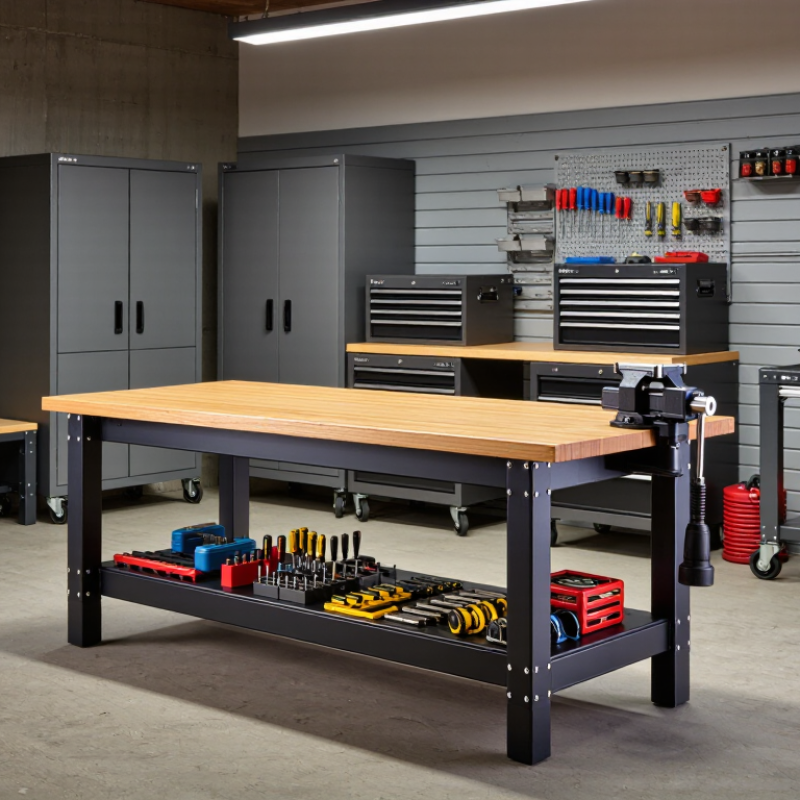
What Makes a Garage Bench Suitable for Different Workshop Tasks
A suitable garage bench begins with task fit, not appearance. For hand tools, a 900–1,000 millimetre height usually keeps elbows comfortable. For detail assembly, a slightly higher surface can reduce stooping. Heavy repairs need a lower, rigid frame for better leverage. The surface should resist oil, clamps, and dropped metal parts. I prefer replaceable sacrificial panels. They show wear honestly.
Load rating matters, but published capacity can mislead when weight sits near one edge. Choose a wide footprint, cross-bracing, and adjustable feet. A 600-millimetre-deep top provides tool space without excessive reach. Keep frequently used items within forearm reach. The Health and Safety Executive’s Work-related Musculoskeletal Disorders in Great Britain, 2023/24 report, estimated 511,000 affected workers. It also estimated 7.8 million lost working days. Those figures make bench height and reach practical safety decisions.
Different jobs need different accessories. Woodworking benefits from dog holes and a front vise. Metalwork needs a heat-tolerant top and firm clamping points. Electrical repair needs an ESD-safe mat, bright task lighting, and small-parts trays. NIOSH identifies force, awkward posture, repetition, and vibration as ergonomic risk factors. I once chose storage over legroom. The drawers blocked my knees during filing. That mistake changed my method: measure the worker, tools, and movement before choosing the bench.
| No. | Bench Type | Best Suited For | Overall Dimensions (L × W × H) |
Work-Surface Size | Surface Material | Indicative Working Load | Height Feature | Storage or Accessories | Key Advantage | Main Limitation |
|---|---|---|---|---|---|---|---|---|---|---|
| 1 | Heavy-Duty Assembly Bench | General fabrication, clamping, repair and assembly | 72 × 30 × 36 in (183 × 76 × 91 cm) |
72 × 30 in (183 × 76 cm) |
38–40 mm hardwood or laminated timber | 1,000–1,500 lb (454–680 kg) |
Fixed | Lower shelf; optional bench vise and dog holes | Large, rigid surface for demanding work and long components | Requires substantial floor space and is difficult to move |
| 2 | Compact Wall-Mounted Bench | Small garages, light repairs and hand-tool work | 48 × 24 × 36 in (122 × 61 × 91 cm) |
48 × 24 in (122 × 61 cm) |
30–35 mm laminated wood or plywood with edging | 300–500 lb (136–227 kg) |
Fixed; fold-up versions available | Wall cleat, pegboard or shallow overhead shelf | Uses little floor area and can leave the garage floor clear | Limited depth and less suitable for heavy impact work |
| 3 | Mobile Workshop Bench | Multi-purpose garages where tools must be repositioned | 60 × 30 × 36 in (152 × 76 × 91 cm) |
60 × 30 in (152 × 76 cm) |
30–40 mm hardwood or steel-framed timber top | 600–1,000 lb (272–454 kg) |
Fixed | Locking casters, drawers and lower shelf | Combines useful work area with flexible workshop layout | Casters can reduce stability unless locked or retracted |
| 4 | Metalworking Fabrication Bench | Welding, grinding, metal cutting and fabrication | 72 × 36 × 36 in (183 × 91 × 91 cm) |
72 × 36 in (183 × 91 cm) |
6–10 gauge steel plate with welded steel frame | 1,500–2,000 lb (680–907 kg) |
Fixed | Grounding point, fixture holes and lower tool shelf | Resists heat, sparks, vibration and heavy clamping forces | Heavy, noisy and unsuitable for delicate finishing work without a protective mat |
| 5 | Woodworking Workbench | Planing, chiseling, joinery and furniture assembly | 60 × 30 × 34 in (152 × 76 × 86 cm) |
60 × 30 in (152 × 76 cm) |
Hardwood top with replaceable wooden or polymer jaw faces | 500–800 lb (227–363 kg) |
Fixed; selected models offer adjustable feet | Front vise, end vise, bench dogs and tool well | Provides secure work holding and excellent resistance to hand-tool shock | Wood surface can be damaged by welding, solvents and metal chips |
| 6 | Electronics and Precision Bench | Circuit repair, measurement, small-part assembly and soldering | 48 × 24 × 38 in (122 × 61 × 97 cm) |
48 × 24 in (122 × 61 cm) |
High-pressure laminate or sealed plywood with ESD-safe mat | 250–400 lb (113–181 kg) |
Fixed; seated-work height options | Upper shelf, cable management, lighting and power strip | Organizes small tools and supports clean, static-controlled work | Not intended for heavy impact, welding or large assemblies |
| 7 | Adjustable-Height Bench | Mixed seated and standing tasks or shared workspaces | 60 × 24 × 34–42 in (152 × 61 × 86–107 cm) |
60 × 24 in (152 × 61 cm) |
Laminate, bamboo or hardwood panel on steel legs | 300–600 lb (136–272 kg) |
Manual or electric adjustment | Leveling feet; optional casters and monitor shelf | Improves ergonomic comfort for different users and tasks | Height-adjustment mechanisms add cost and may reduce maximum rigidity |
| 8 | Automotive Service Bench | Parts cleaning, engine-component work and vehicle maintenance | 60 × 30 × 36 in (152 × 76 × 91 cm) |
60 × 30 in (152 × 76 cm) |
Powder-coated steel with replaceable steel or composite work top | 800–1,200 lb (363–544 kg) |
Fixed | Drawer cabinet, fluid-resistant tray and paper-roll holder | Handles oily parts and provides organized storage for service tools | Metal surfaces can scratch finished parts without padding |
| 9 | Fold-Down Multipurpose Bench | Occasional DIY projects and garages needing maximum clearance | 48 × 24 × 42 in (122 × 61 × 107 cm) when open |
48 × 24 in (122 × 61 cm) |
18–25 mm plywood or laminated timber | 200–400 lb (91–181 kg) |
Folding wall-mounted design | Folding brackets, wall storage rail and removable vise | Reclaims floor space when the work surface is not needed | Usually has less rigidity and load capacity than a permanent bench |
| 10 | Portable Jobsite Bench | Temporary projects, outdoor repairs and rented garages | 36 × 20 × 30 in (91 × 51 × 76 cm) |
36 × 20 in (91 × 51 cm) |
20–25 mm plywood, molded composite or laminated board | 200–350 lb (91–159 kg) |
Folding legs; some models offer two height settings | Carry handle, folding supports and integrated clamps | Easy to transport, store and set up wherever work is required | Smaller surface and reduced stability for high-force operations |
Note: Dimensions and load ranges represent practical workshop configurations. Actual capacity depends on frame construction, fasteners, floor condition, load distribution and whether the bench is anchored.
Related Posts
-
How to Choose the Right Garage Workbench?
-
10 Best Cabinet Workbenches for Every Workshop
-
How to Choose the Best Rolling Workbench for Your Workshop Needs
-
14 Best Rolling Work Benches for Ultimate Workspace Efficiency
-

7 Best Garage Work Bench Solutions for Every DIY Enthusiast
-
2026 Best Industrial Workbench for Global Buyers?
Footer
Affiliations