Choosing the Best Pressure Washer is not simply a matter of selecting the highest PSI rating. Global buyers face different cleaning conditions, electrical systems, water supplies, and service expectations. A compact 1,500-PSI unit may suit a European balcony, while a 3,000-PSI machine may be more practical for commercial vehicle fleets. The right choice depends on measured performance, not impressive packaging.
Industry forecasts show sustained demand. Grand View Research estimates that the global pressure washer market was valued at approximately USD 2.1 billion in 2022, with continued growth expected through 2030. Fortune Business Insights reports a different market baseline and projects expansion through 2032. These differences matter. They reflect varying definitions, product categories, and regional coverage. Buyers should treat market figures as guidance, not absolute truth.
Real-world testing should lead the decision. Check both pressure and water flow, because PSI alone can misrepresent cleaning speed. Confirm voltage, plug type, motor protection, hose length, noise output, and replacement-parts availability. A machine that performs well in a factory showroom may disappoint when water pressure fluctuates or adapters are difficult to source. Safety certifications and manufacturer documentation also deserve careful review. They are not exciting. They are essential.
This guide compares electric, battery-powered, and petrol models for residential, agricultural, and commercial users. It considers portability, maintenance, operating cost, and regional support. Some recommendations may remain imperfect because global conditions vary widely. That limitation should be acknowledged. A reliable purchase is not the strongest machine; it is the one that fits the buyer’s water, power, workload, and local service reality.
What Is the Best Pressure Washer for Global Buyers?
Pressure Washer Types and Their Core Cleaning Functions
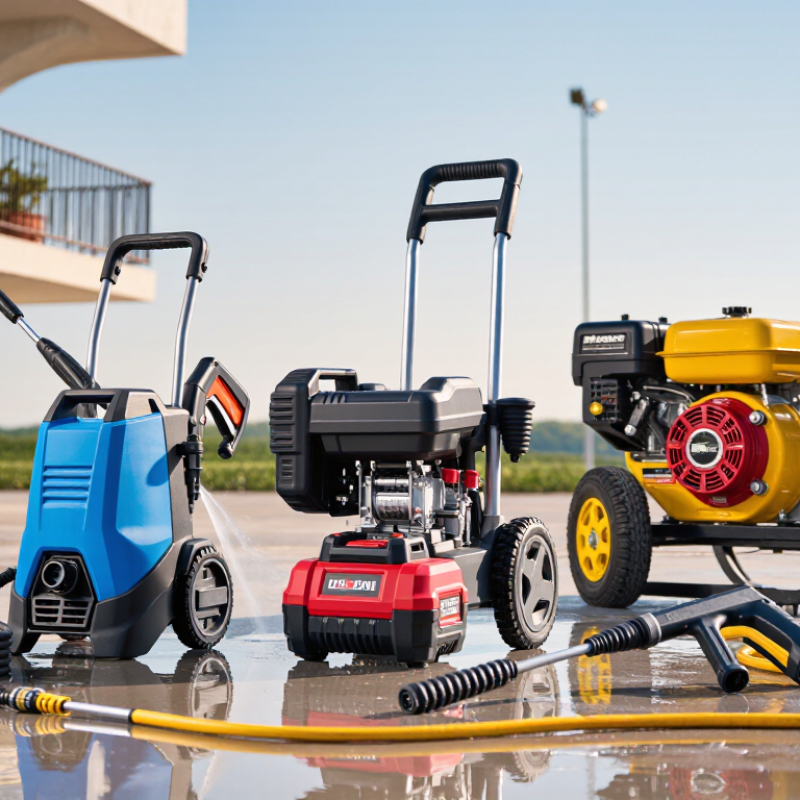
Choosing the best pressure washer depends on the surface, water supply, and cleaning frequency. Electric models suit balconies, vehicles, windows, and small patios. They are quieter and easier to maintain, but their cables can limit movement. Gas-powered models deliver stronger, continuous cleaning for large driveways, workshops, and farm equipment. They are heavier and require careful ventilation during use. Cordless units offer excellent mobility. However, battery life may restrict longer jobs.
Pressure is only one part of performance. Flow rate controls how quickly dirt and detergent move away. A narrow nozzle creates a sharp spray for stubborn marks, while a wider nozzle protects painted surfaces and wood. I have seen users choose maximum pressure, then damage soft decking within minutes. More power is not always better. Water temperature, hose length, inlet fittings, and local voltage standards also affect real performance. Global buyers should check these details before comparing specifications.
Tips
Match the nozzle to the surface. Test a hidden area first. Keep the spray moving. Avoid spraying electrical connections, loose paint, or fragile seals. Read the manual carefully, even when the controls seem obvious. A reliable machine should feel balanced, start consistently, and include accessible replacement parts. Some buyers overlook after-sales support. That can turn a small maintenance issue into an expensive delay.
Global buyers should compare pressure washers by measurable specifications, not advertised power alone. Grand View Research’s 2024 industry analysis identifies residential use as a major market segment, where portability, efficiency, and maintenance often influence purchasing decisions. Pressure is measured in bar or PSI, while water output uses litres per minute. Both figures matter.
A practical comparison starts with cleaning power. Multiply PSI by GPM, then divide by 1,000 for a simple performance index. A 2,000 PSI unit using 8 L/min produces a stronger working profile than a 2,200 PSI model using 5 L/min. Check the motor’s rated wattage, duty cycle, and thermal protection. A high figure can disappoint.
Water efficiency deserves equal attention. The U.S. Environmental Protection Agency’s WaterSense research shows that efficient equipment can reduce water consumption without sacrificing intended performance, although pressure washers are not universally covered by its certification. Look for adjustable nozzles, inlet filters, hose length, and replaceable seals. IEC 60335-2-79 also provides a useful safety reference for high-pressure cleaners.
Voltage and frequency must match the destination market. Confirm 120V or 230V compatibility before ordering. Noise data should be listed in dB(A), preferably under comparable testing conditions. I would also inspect service access and spare-part availability. It is easy to overvalue peak pressure. Real cleaning depends on nozzle distance, surface type, and operator control. Some published specifications remain difficult to compare fairly.
The chart compares representative midpoint specifications across common pressure washer use classes. Peak pressure is shown in bar, while water flow is shown in liters per minute. Higher pressure improves cleaning force, whereas higher flow rate generally improves cleaning speed. Actual specifications vary by model, voltage standard, motor type, and regional safety requirements.
For global buyers, the best pressure washer depends on the cleaning task, water supply, and local electricity. A compact electric unit suits cars, bicycles, windows, and small balconies. Its moderate pressure reduces paint damage and uses less water. Larger patios, farm tools, and stained concrete need higher pressure and stronger water flow. Pressure alone can mislead. Cleaning speed depends on both PSI and GPM.
I have found that a wide fan nozzle works well for painted walls and vehicles. A narrow nozzle removes stubborn dirt but can mark soft wood or strip loose surfaces. Hot-water models help dissolve grease, while cold-water units usually cost less and need simpler maintenance.
Check voltage, plug type, hose length, inlet size, and available replacement parts before buying internationally. I once focused too much on pressure and ignored hose storage. That mistake made daily use frustrating.
Tips: Match the nozzle to the surface. Test a hidden area first. Keep the spray moving. Wear eye protection and closed shoes. Avoid spraying electrical connections, damaged surfaces, or people. For detergent, use a solution suitable for pressure washers and follow the equipment instructions. A model may look powerful in specifications, yet feel inconvenient after ten minutes of carrying, refilling, or changing attachments. Practical handling deserves equal attention.
The best pressure washer is not universal. Regional electricity, water access, and service skills change the decision. IEC 60038 documents different nominal supply systems, including 120 V and 230 V networks. A 230 V machine connected to a 120 V outlet can fail dangerously without approved conversion equipment. Check frequency too. Fifty and sixty hertz motors may behave differently. Voltage matters.
For grid-stable homes, an electric unit is usually quieter and easier to maintain. Remote contractors may prefer an engine-driven unit, but fuel storage, ventilation, noise, and emissions require local compliance. Battery equipment suits short outdoor jobs, yet charging availability limits productivity. The International Energy Agency’s Electricity 2024 report projects global electricity demand to grow by 3.4% annually through 2026. That trend makes local supply reliability worth checking, not assuming.
Water behavior matters more than advertised pressure. The U.S. Environmental Protection Agency says pressure washers commonly use 2–4 gallons per minute, versus up to 10 gallons for a garden hose. In water-stressed regions, a low-flow pump, storage tank, and inlet filter may matter more than maximum PSI. The WHO/UNICEF Joint Monitoring Programme reported that 2.2 billion people lacked safely managed drinking water in 2022. Potable water is not an unlimited cleaning resource. Test the inlet thread, hose diameter, filter access, and recovery time. My selection rule is imperfect: peak PSI still attracts attention. Flow, voltage, and spare-part access usually decide whether the machine works next month.
| Evaluation Dimension | Recommended Specification for Global Use | Key Regional Considerations | Best-Fit Applications |
|---|---|---|---|
| Power Source | Electric for indoor or residential work; gasoline or diesel for remote locations and heavy-duty outdoor cleaning. | Electrical models require compatibility with local voltage, frequency, plug type, grounding, and safety regulations. Fuel-powered models avoid grid-voltage differences but require ventilation and fuel availability. | Electric: homes, workshops, and light commercial work. Fuel-powered: farms, construction sites, fleets, and areas without reliable electricity. |
| Voltage and Frequency | Choose a model rated specifically for the destination market, commonly 100–127 V or 220–240 V, and 50 or 60 Hz. | A plug adapter does not convert voltage or frequency. Motors and pumps may overheat, lose performance, or fail when operated outside their rated input. | International distribution, export projects, and professional users needing reliable long-term operation. |
| Rated Working Pressure | Approximately 70–120 bar (1,000–1,740 psi) for general residential cleaning; 120–200 bar (1,740–2,900 psi) for commercial and industrial tasks. | Compare working pressure rather than maximum or peak pressure. Excessive pressure can damage paint, wood, masonry joints, seals, and vehicle components. | Lower range: vehicles, patios, furniture, and siding. Higher range: equipment, concrete, agricultural machinery, and commercial surfaces. |
| Water Flow Rate | About 5–8 L/min for household use and 8–15 L/min for commercial cleaning. | The water source must provide at least the washer's required inlet flow. Low supply flow can cause pump cavitation, unstable pressure, and premature wear. | Lower flow conserves water; higher flow removes loose dirt and rinses large surfaces faster. |
| Water Supply System | Direct mains connection is preferred. Self-priming or tank-compatible systems are useful where tap pressure is limited. | Check whether the unit permits gravity-fed or alternative water sources. A standard garden hose connection does not automatically mean that the machine can draw from a container. | Urban homes: mains water. Remote sites: models designed for tanks, rainwater storage, or portable water containers. |
| Inlet Water Temperature | Cold-water models commonly accept inlet water up to about 40°C; hot-water models may accept higher temperatures according to their technical rating. | Never exceed the manufacturer's stated inlet temperature. Hot-water capability requires appropriate seals, pump materials, heating components, and safety controls. | Cold water: general cleaning. Hot water: grease, oil, food-processing residue, and industrial maintenance. |
| Motor and Pump Design | Induction motors and metal pump components generally support longer duty cycles than compact universal-motor and plastic-pump designs. | Confirm thermal protection, pump serviceability, spare-part access, and operating-duty limits before importing or deploying the equipment. | Universal-motor designs: occasional household use. Induction-motor designs: frequent residential or professional use. |
| Duty Cycle | Select according to operating frequency: intermittent household use, regular commercial use, or continuous-duty industrial work. | Allow cooling periods when specified. Running beyond the rated duty cycle can shorten motor, pump, hose, and seal life. | Occasional cleaning: compact units. Daily cleaning: commercial units with stronger cooling and serviceable components. |
| Hose and Connector Compatibility | Use high-pressure hoses and fittings rated above the washer's maximum pressure, with corrosion-resistant couplings and suitable thread or quick-connect standards. | Hose-thread and tap-connection standards vary by market. Verify inlet diameter, outlet fitting, quick-connect profile, and replacement availability. | Global maintenance fleets, distributors, and users who need locally available replacement accessories. |
| Portability and Protection | For mobile work, prioritize wheels, a stable frame, hose storage, lifting points, and an enclosure suited to the operating environment. | Outdoor and humid regions require protection against water ingress and corrosion. Cold climates require proper draining and freeze protection. | Compact electric units: residential mobility. Framed fuel-powered units: construction, agriculture, and fleet service. |
| Safety and Compliance | Look for documented electrical safety, grounding or residual-current protection requirements, thermal overload protection, and pressure-relief provisions. | Import requirements differ by country. Confirm local certification, labeling, language, emissions rules for fuel engines, and workplace-safety obligations. | All users, especially exporters, rental businesses, contractors, and commercial operators. |
| Water Efficiency | A lower flow rate combined with an appropriate nozzle and correct technique can reduce water consumption without sacrificing cleaning performance. | Water restrictions, wastewater rules, and local drainage conditions vary. Collect or manage runoff where detergents, oil, or chemicals are present. | Water-scarce regions, vehicle detailing, facility maintenance, and environmentally regulated sites. |
| Best Overall Selection Logic | Choose the lowest pressure and flow combination that safely completes the intended task while matching the local power and water infrastructure. | Regional compatibility is more important than headline pressure. Confirm electrical input, water availability, connector standards, regulations, and service support before purchase. | A practical choice for international buyers seeking reliable performance, manageable operating costs, and easier maintenance. |
Note: Pressure, flow, voltage, frequency, temperature, and duty-cycle figures are representative selection ranges. Always verify the exact technical rating, local regulations, and installation requirements for the destination market.
Choosing the best pressure washer for global buyers starts with safety, not maximum pressure. Check whether the unit carries recognized electrical certification for your destination. Voltage and plug compatibility matter. A mismatch can damage the motor or create a shock risk. Models with residual-current protection, thermal overload protection, and secure hose connections offer useful safeguards. Never aim the spray at skin, animals, windows, or loose roof materials. High pressure can cause hidden damage.
Maintenance needs vary by water quality and frequency of use. After each session, flush the hose and release trapped pressure. Inspect the spray wand, inlet filter, seals, and power cable for cracks. Hard water may clog the nozzle faster, so cleaning it with the correct tool is safer than using a sharp needle. Store the machine dry and protected from freezing temperatures. I once underestimated storage conditions; a small amount of frozen water can split pump components.
Buying decisions should match the work, not the advertising number. Compare working pressure, water flow, duty cycle, noise, weight, and hose length. A patio may need steady flow, while a vehicle often needs gentler control. Confirm spare-part availability, warranty terms, language support, and service access in your country. A cheaper unit becomes expensive when one seal requires international shipping. Some published performance figures are measured under ideal conditions. Treat them as guidance, not certainty. Check the manual before purchase.
1901 West Main Street
Washington, MO 63090
Main Directory: 1-800-227-4873
Email: sale@pangcofurniture.com

We’re always looking for talented individuals to join our team. Send us your resume using the form below. When a position comes available that matches your skillset, one of our team members will reach out to you.
"*" indicates required fields