How to Choose Firestopping Sealant in 2026?
Choosing Firestopping Sealant in 2026 requires more than comparing prices, colors, or advertised fire ratings. Market reports indicate continued demand for fire protection materials as data centers, hospitals, high-rise buildings, and infrastructure projects expand. MarketsandMarkets’ Fire Protection Materials Market report identifies construction growth, stricter safety requirements, and renovation activity as major demand drivers. Grand View Research also reports steady expansion in the global firestop materials market through the decade. These figures matter, but they do not select the right sealant for a real wall or floor assembly.
The critical question is compatibility. Is the sealant tested with the exact pipe, cable, insulation, joint width, and substrate? UL 2079 and ASTM E1966 address fire-resistive joint systems, while ASTM E814 evaluates penetration firestop systems. Manufacturer test listings should match the project condition, not merely resemble it. As Bill McHugh of the Firestop Contractors International Association has emphasized, “Firestopping is a system, not a product.” That principle deserves attention.
Look closely at movement capability, smoke sealing, moisture exposure, curing time, tooling, and long-term maintenance. A sealant placed around a vibrating metal pipe faces different stresses from one surrounding bundled cables. The wrong choice can look neat and still fail the tested design. That assumption is risky. Product data sheets may also leave practical questions unanswered, especially around mixed materials and field tolerances. A reliable 2026 selection process should combine laboratory evidence, qualified installation experience, project specifications, and documented manufacturer support. Cost remains relevant, but it should follow performance, not replace it. The best answer is rarely the cheapest pail.
Define Firestopping Sealant by ASTM E814 and UL 1479 Ratings
How to Choose Firestopping Sealant in 2026?
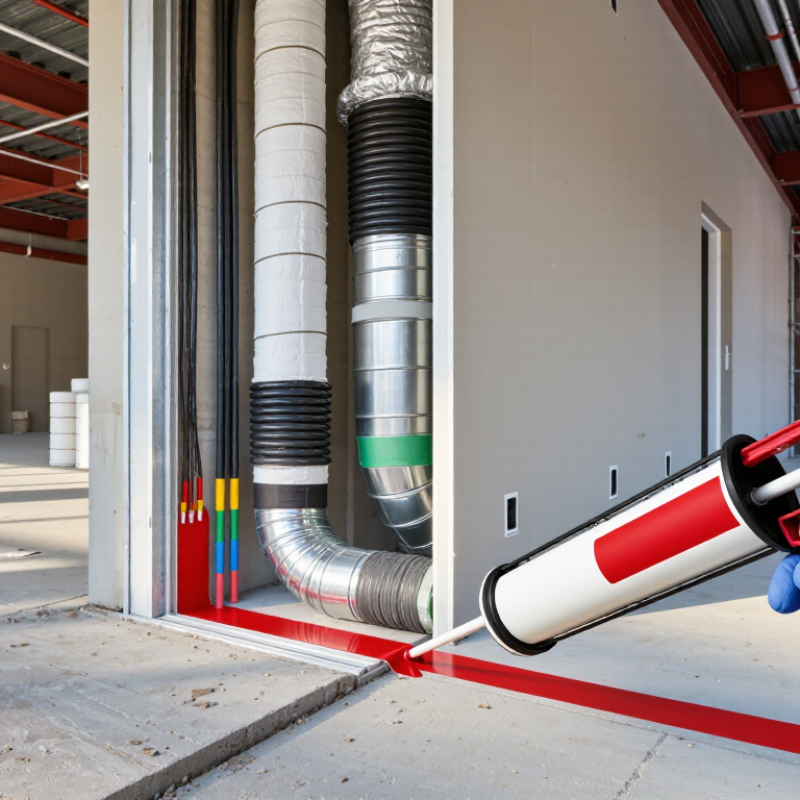
Firestopping sealant should be defined by its tested system, not its container label. ASTM E814 and UL 1479 evaluate penetration firestop assemblies under controlled fire exposure. The F rating measures flame and hot-gas resistance. The T rating measures temperature rise on the unexposed side. Some systems also report air-leakage performance. A two-hour sealant does not automatically create a two-hour assembly. The exact wall, floor, pipe, cable, opening size, and installation depth must match the listing. This detail is often missed.
NFPA’s Fire Loss in the United States During 2023 estimated 1.39 million fires and about 22.1 billion dollars in direct property damage. These figures show why small penetrations deserve serious review. Field experience also reveals a practical problem: installers may select a familiar material without checking movement, moisture, or service temperature. That shortcut can weaken confidence, even when the product appears robust. I would question any specification that lists only “fire-rated sealant” without an ASTM E814 or UL 1479 system reference.
Tips: Check both F and T ratings. Confirm the tested penetration type. Match the joint width and sealant depth. Review the installation drawing before ordering materials. Photograph each completed penetration. Keep the listing and inspection records together. One more caution: laboratory ratings cannot repair poor field workmanship. A neat bead is not proof of compliance.
How to Choose Firestopping Sealant in 2026?
Define Firestopping Sealant by ASTM E814 and UL 1479 Ratings
ASTM E814 and UL 1479 evaluate complete firestop systems rather than sealant products in isolation. The hourly rating indicates how long the tested system resisted fire exposure under the applicable test conditions. Common listed ratings include 1, 2, 3, and 4 hours.
When selecting a firestopping sealant, match the tested system to the required hourly rating, penetration type, substrate, joint or opening size, and installation configuration. F ratings address fire endurance and flame passage, while T ratings also address heat transmission. Some listings may additionally include L ratings for air leakage and W ratings for water leakage.
Compare Silicone, Acrylic, and Intumescent Sealants by Joint Movement
How to Choose Firestopping Sealant in 2026?
Compare Silicone, Acrylic, and Intumescent Sealants by Joint Movement
Choosing a firestopping sealant starts with movement, not the product label. I inspect joint width, expected cycling, temperature, substrate, and the tested penetration or joint system. A narrow concrete joint may behave calmly, while a façade connection can open and close repeatedly. Small details matter. No product wins every joint.
Silicone sealants usually suit joints needing high elasticity and repeated movement. They remain flexible across broad temperature changes, but compatibility with coatings and adjacent materials requires checking. Acrylic sealants are often easier to tool and paint. They fit low- to moderate-movement gaps, especially where movement stays predictable. They may perform poorly with persistent moisture or large cyclic movement. That distinction is easy to miss.
Intumescent sealants react differently. Heat causes them to expand and seal openings around combustible services or specific penetrations. They are not automatically the best choice for moving joints. Some formulations accommodate limited movement, while others depend on rigid backing. I would verify the tested movement rating, installation depth, backing material, and fire exposure direction before approval. Do not rely on generic “fire-rated” wording. Review the test evidence and installation instructions. Field conditions can defeat a suitable sealant. Dust, excessive gap width, or poor tooling can change the result. Movement calculations are sometimes optimistic, so a conservative allowance deserves discussion with the fire engineer.
Check Substrate, Temperature, Smoke Control, and Installation Quality
How to Choose Firestopping Sealant in 2026?
A firestopping sealant must match the substrate and tested assembly. Concrete, gypsum board, masonry, and metal decks behave differently during fire exposure. Check the approved system for movement, joint width, backing material, and penetration type. A generic “fire-rated” label is not enough.
ASTM E814 and UL 1479 evaluate through-penetration firestop systems, while ASTM E1966 addresses fire-resistant joint systems. These tests apply to specific assemblies, not unlimited site conditions.
Temperature deserves closer attention than many specifications allow. Confirm storage limits, application temperatures, curing requirements, and service temperatures. Cold steel can reduce adhesion. Damp concrete can trap moisture beneath the sealant. A small thermometer and moisture check may prevent a costly failure. I would also question products applied outside their tested temperature range, even when the finished bead looks perfect.
Smoke control is equally important. NFPA’s Fire Loss in the United States During 2023 reported 3,670 civilian fire deaths and approximately 13,350 civilian injuries. Smoke movement can make a sealed-looking penetration unsafe. Check air-leakage performance under ASTM E283 or the project’s required smoke-control test.
Installation quality remains decisive: clean the opening, install the correct backing, maintain sealant depth, tool the surface, and record batch and inspection details. NFPA 92 provides smoke-control guidance, but field workmanship still needs verification. That gap is often underestimated.