Choosing reliable Stainless Steel Shackles manufacturers requires more than comparing catalog prices. A shackle may look polished and strong, yet its performance depends on alloy grade, forging quality, pin design, thread accuracy, heat treatment, and inspection records. For this China-focused review, we examine manufacturers through practical evidence: factory experience, production capacity, material traceability, load testing, surface finishing, certifications, and export performance. Details matter. A clean weld, precise pin fit, and readable marking can reveal more than attractive product photographs.
Metallurgist Harry Bhadeshia explains the material principle clearly: “Stainless steel is not rust-proof steel.” Its chromium content forms a protective oxide layer, but saltwater, chemicals, crevice exposure, and poor maintenance can still cause damage. This warning matters when evaluating Stainless Steel Shackles for marine lifting, rigging, architecture, and outdoor equipment. Grade 304 may suit general environments, while 316 often offers better resistance near seawater. However, the correct choice still depends on load direction, working temperature, corrosion conditions, and manufacturer testing. Stronger is not always safer.
Our selection also includes uncomfortable questions. Are test certificates independently verifiable? Does the stated working load limit match actual testing? Are rejected parts controlled, or merely polished again? Some manufacturers communicate these details well. Others leave gaps. That does not automatically disqualify them, but it deserves caution. The following list identifies ten Chinese manufacturers using balanced criteria, practical observations, and publicly available evidence. It is a useful starting point, not a substitute for engineering review or site-specific risk assessment.
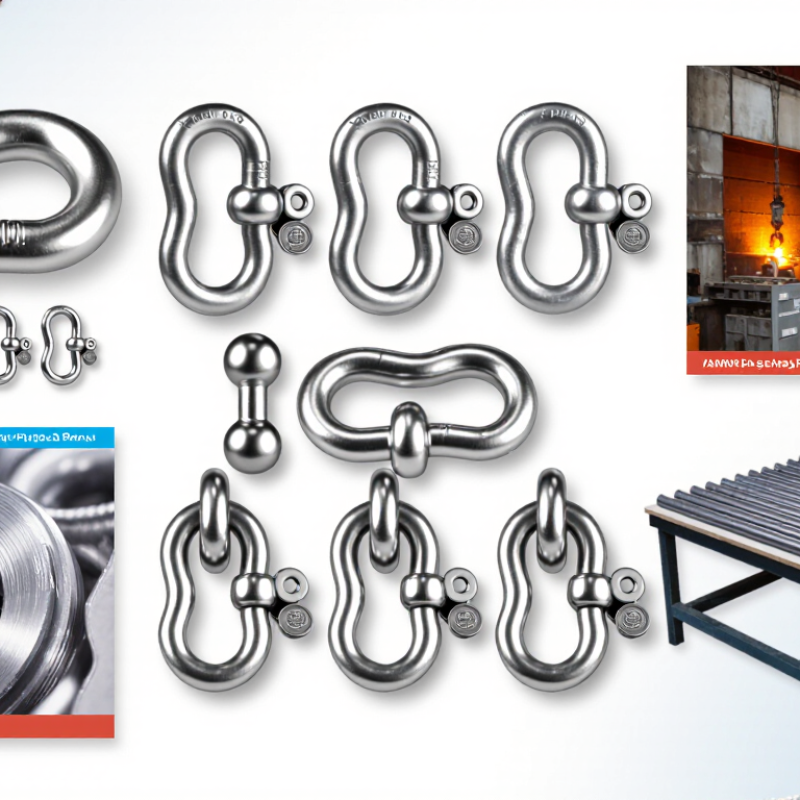
Stainless steel shackles are connecting devices with a bow and pin. They join ropes, chains, slings, and lifting points. Their smooth surface resists rust, staining, and frequent washing better than ordinary carbon steel. Grade 316 stainless steel generally performs well near seawater, while 304 is common in cleaner indoor environments. However, “stainless” does not mean maintenance-free. Salt deposits can still cause discoloration and corrosion around threads.
These shackles appear on boats, dock equipment, architectural cables, food-processing machinery, and outdoor fixtures. In marine work, they secure lines and hardware exposed to spray. In factories, they connect components that need regular cleaning. For lifting applications, the shackle must have a clear working load limit, compatible pin, and suitable shape. Screw-pin models support quick adjustments, while bolt-type designs offer stronger resistance to accidental opening.
Check the pin before every important use. It should turn smoothly and seat fully. Look for cracks, deep scratches, thread damage, or unusual stretching. Never judge capacity by appearance alone. A small shackle may look strong but still have a limited working load. I have found that users often focus on corrosion resistance and overlook angle loading. That mistake can reduce performance sharply. Shackles also need protection from harsh chemicals, trapped moisture, and mismatched hardware. Their practical value depends on correct selection, not polished appearance.
China’s large stainless steel sector creates a broad supplier base. World Stainless reported about 58.4 million tonnes of global crude stainless steel production in 2023. China contributed roughly 62 percent. This scale supports material availability, but production volume alone proves little.
Selection begins with documented material control. Serious manufacturers provide heat numbers, grade certificates, and corrosion-resistant alloy verification. Common grades include 304 and 316, although grade choice must match salt exposure and working conditions. Factory audits should examine forging temperature, solution treatment, thread quality, and surface finish. Small details matter. A rough pin thread can damage assembly reliability.
Independent testing is essential. For lifting applications, buyers should request proof-load records, dimensional checks, and certificates referencing applicable requirements, such as EN 13889 or ASME B30.26. ISO 3506 also provides useful guidance for stainless fastener mechanical properties, though it does not certify a complete shackle. Reports from the International Organization for Standardization stress controlled testing and traceability across relevant product categories. Export history, inspection frequency, and corrective-action records reveal more than polished catalogs. The process is not perfect. Supplier rankings can change after one failed batch, especially when documentation looks stronger than factory practice.
China remains a major stainless steel manufacturing center. World Stainless reported approximately 58.4 million tonnes of global crude stainless steel production in 2023. China contributed about 36.2 million tonnes. This scale supports strong supply chains for marine, lifting, and architectural hardware.
A credible top-ten list should examine more than factory size. Buyers should check 316 or 316L material certificates, heat numbers, proof-load records, and thread accuracy. Each shackle should match its stated working load limit. ASTM F1145 and related lifting practices provide useful reference points, although product requirements differ by application. Factory audits also matter. Look for calibrated test benches, controlled heat treatment, and clear inspection records.
Details reveal manufacturing quality. A polished shackle should show an even finish around the bow and pin. Threads should turn smoothly without visible galling. The pin must seat fully, not stop against rough machining. ISO 9001 certification can support process control, but certification alone proves little. Request recent batch documents.
Trade data can help compare export experience. UN Comtrade records show China as a leading exporter of stainless-steel hardware categories, though customs codes rarely isolate shackles precisely. That limitation deserves attention. A ranking based only on online visibility may be misleading. Some smaller factories offer better testing, while some larger suppliers lack consistent documentation. Audits, samples, and independent load testing remain necessary before approval.
A top-ten list is useful, but it cannot replace technical comparison. The International Stainless Steel Forum reported 58.4 million tonnes of global stainless steel production in 2023. That scale creates choice, but also inconsistent quality. Compare the shackle’s material certificate, heat number, tensile strength, and corrosion grade. A polished surface is not proof of reliable performance.
Check standards carefully. ASME B30.26 covers rigging hardware requirements, while EN 13889 addresses forged steel shackles. Confirm working load limit, proof testing, dimensional tolerances, and permanent deformation results. Ask whether each production batch receives documented inspection. Strong manufacturers should show forging controls, heat-treatment records, calibrated testing equipment, and traceability from billet to final inspection. The International Organization for Standardization’s quality principles support documented processes, but certification alone does not guarantee a perfect shackle.
Choosing among China’s top stainless steel shackle manufacturers requires more than comparing online prices. Start with the shackle’s working environment. Marine fittings may need 316 stainless steel, while indoor lifting accessories may use 304. Ask for material certificates, heat numbers, and dimensional inspection records. A reliable factory should explain breaking load, working load limit, pin design, and surface treatment clearly.
Visit the production area through an audit or live video call. Check forging, machining, polishing, marking, and final inspection. Request samples from regular production, not specially prepared pieces. Test thread accuracy, pin rotation, body symmetry, and visible surface defects. Independent load testing can reveal weaknesses that photographs hide. Keep records of test dates and sample numbers.
Experience has taught me that communication predicts quality. Ask how the manufacturer handles drawing changes, packaging damage, and rejected pieces. Response speed matters. So does technical understanding. One overlooked tolerance once caused poor pin alignment in a sample order. The supplier corrected it, but the delay was avoidable. I now confirm every critical dimension in writing. Review production capacity, minimum order quantities, lead times, export experience, and traceability before selecting a partner. A low quotation may exclude testing, protective packaging, or replacement support. Check those details carefully.
1901 West Main Street
Washington, MO 63090
Main Directory: 1-800-227-4873
Email: sale@pangcofurniture.com

We’re always looking for talented individuals to join our team. Send us your resume using the form below. When a position comes available that matches your skillset, one of our team members will reach out to you.
"*" indicates required fields